
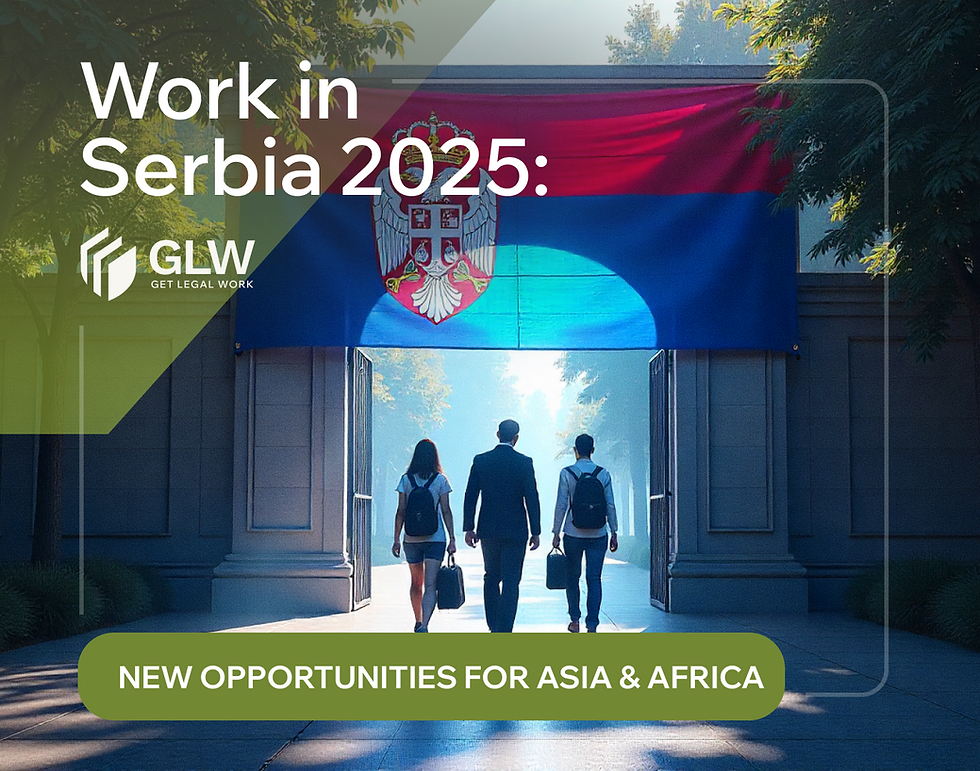
Serbia Opens Doors for African & Asian Workers — How It Works
In 2025, Serbia is making a bold move toward migrants from Africa and Asia, simplifying work and visa conditions. This presents new opportunities for qualified professionals from India, Nepal, Pakistan, Nigeria, and beyond.
Read on to learn what's changed in policy, which sectors are actively recruiting, and how to apply without common mistakes.
New Government Initiatives & Partnerships
In 2025, Serbia significantly simplified regulations for foreign workers from Asia and Africa, including citizens of India, Nepal, Pakistan, Nigeria, and Kenya. Now, to apply for a long‑term work D‑visa, you don’t need to pass a Labor Market Test in advance. Instead, this check is conducted after arrival, during the residence permit process. This greatly speeds up the process and makes it more convenient.
The government is also developing a new e‑Visa platform, allowing online applications for short-term C visas. In the future, this service will be available for D‑work visas, making the process even simpler and more transparent.
Another key change is the active attraction of foreign investors. Serbia is signing agreements with major companies from China, India, and Africa, creating new jobs for foreign experts in construction, energy, logistics, manufacturing, and services.
Serbia officially aims to become one of the most open labor markets in Eastern Europe for qualified non-EU workers — and is actively working toward it.
Visa Types & Customs Relief
Foreigners need to obtain a long-term D-work visa to work in Serbia. This visa allows a stay of 90 to 180 days and can be extended with a temporary residence permit for up to 36 months.
Citizens of India who previously held Schengen, UK, or US visas are temporarily exempt from needing a short-term visa (up to 90 days).
Required Documents
Below is a short table of essential document requirements:
Item | Purpose |
Passport (min. 6 months validity, ≥2 blank pages) | Entry to Serbia |
Completed application form (Visa type C or D) | To specify visa category |
Proof of employment (contract/invitation) | To justify purpose of stay |
Qualification or work experience certificate | To prove professional competence |
Insurance, police clearance, photo | To meet safety/security requirements |
Even if the list seems clear, small errors or inaccuracies can lead to visa denial. To complete the process quickly and safely, trust GLW with document preparation. We’ll gather and verify your entire package for you.
Formalities, Document Packaging & Deadlines
Correct submission is key to maximizing your chances for a Serbia work visa for Africans or jobs in Serbia for Indian workers:
Start preparing 2–3 months before your trip: renew your passport, obtain insurance, complete translations, and apostille documents.
Use color copies and organize documents neatly in folders by category — passport, contract, insurance, certificates.
Apply for the D‑visa through the Serbian consulate in your country — or online if available.
Upon arrival in Serbia — submit a single permit application for both temporary residence and work permit.
These simple yet critical steps help you avoid work visa mistakes Europe, prepare thoroughly for the visa interview, and confidently pass the entire process without rejections.
Conclusion
Serbia is showing openness to African and Asian workers by simplifying D‑visa processes, launching an e‑Visa platform, and signing international deals. For professionals from India, Pakistan, Kenya, and beyond, this is a real opportunity to work in sectors like IT, automotive, and mining.
To obtain your Serbian work visa with confidence and minimal risk, rely on GLW. We assist with checking qualifications, preparing a flawless document package, guiding your application to the consulate, and obtaining your residence permit. Choose experience and safety — partnering with GLW is your reliable path to working in Europe.
Serbia Opens Doors for African & Asian Workers — How It Works
Serbia Opens Doors for African & Asian Workers — How It Works